Why Balance Training Changed My Daily Life — A Science-Backed Shift
Balance isn’t just for athletes or older adults—it’s a core body function most of us overlook until we feel wobbly on our feet. I didn’t think much about it until a minor stumble made me realize how fragile stability can be. Science shows that balance ability reflects nervous system health, muscle coordination, and even brain-body communication. Through simple, daily body adjustments backed by research, I’ve seen real improvements. This is what changed everything.
The Hidden Crisis of Poor Balance
In today’s world, many people spend hours sitting—at desks, in cars, on sofas—leading to a gradual but silent decline in physical coordination. The human body is designed for movement, yet modern lifestyles have made sedentary behavior the norm. This lack of dynamic activity weakens the systems responsible for balance without immediate warning. Unlike strength or endurance, poor balance often goes unnoticed until a misstep leads to a fall or near-fall. For many, especially those over 40, the first sign of imbalance comes during routine moments: stepping off a curb, turning quickly, or rising from a chair too fast. These small incidents are not just accidents—they are signals that the body’s stability systems are underused and undertrained.
Balance relies on three key sensory inputs: the vestibular system in the inner ear, proprioception from muscles and joints, and visual information. The vestibular system detects head motion and spatial orientation, helping the brain understand whether we are moving or stationary. Proprioception, often called the “sixth sense,” allows us to know where our limbs are in space without looking. This feedback comes from nerve endings in muscles, tendons, and joints, constantly reporting body position. Vision provides external reference points, helping confirm what the other two systems detect. When these systems work together seamlessly, balance feels effortless. But when one is impaired—such as blurred vision, inner ear disturbances, or reduced joint sensitivity—compensation is required, increasing the risk of instability.
Common daily environments can unknowingly challenge balance more than we realize. Walking on slippery floors, navigating dimly lit hallways, or even stepping out of a shower can become risky if the body’s stability mechanisms are compromised. A person may not recognize their declining balance until they experience a moment of unsteadiness on stairs or feel the need to grab a railing more frequently. These are not inevitable signs of aging but often symptoms of disuse. Research from the National Institutes of Health indicates that balance begins to decline as early as the fourth decade of life, particularly in individuals with low physical activity levels. Without intervention, this decline accelerates, increasing vulnerability to falls—a leading cause of injury among middle-aged and older adults. The good news is that balance is not fixed; it can be improved at any age through targeted, consistent practice.
Why Balance Reflects Overall Health
Beyond preventing falls, balance serves as a powerful indicator of overall physical and neurological health. It is not merely a function of strong legs or steady feet—it involves complex communication between the brain and body. Every time we stand, walk, or shift weight, our central nervous system processes sensory input, makes split-second decisions, and sends signals to muscles to adjust posture. This integration requires cognitive processing speed, attention, and neuromuscular efficiency. Studies published in the journal Frontiers in Aging Neuroscience have shown that individuals with better balance performance also tend to score higher on tests of executive function, memory, and mental flexibility. This connection suggests that balance training may support not only physical stability but also brain health.
Muscle strength, particularly in the core, hips, and lower legs, plays a critical role in maintaining posture and reacting to instability. Weakness in the glutes, calves, or deep stabilizing muscles can lead to poor alignment and delayed responses when balance is challenged. For example, if the ankle muscles are slow to correct a shift in weight, the body may sway excessively before recovering. Over time, this increases strain on joints and raises the likelihood of injury. Additionally, poor postural control often correlates with chronic conditions such as lower back pain, knee discomfort, and even breathing inefficiencies due to slouched positioning. Addressing balance, therefore, is not just about avoiding falls—it’s about enhancing full-body function and reducing wear and tear on the musculoskeletal system.
Long-term research supports the idea that balance ability predicts future mobility. A landmark study from the United Kingdom Biobank followed over 236,000 adults and found that those who could not stand on one leg for at least 10 seconds had a significantly higher risk of all-cause mortality over the next decade. While this does not mean poor balance directly causes death, it reflects underlying health issues such as reduced muscle mass, impaired nervous system function, or cardiovascular weaknesses. The ability to balance is like a vital sign—silent but telling. When balance declines, it often signals broader physiological changes that, if addressed early, can be reversed or managed. This makes balance training not just a preventive measure but a proactive step toward sustained independence and quality of life.
My First Realization: A Wake-Up Call
The moment that changed my perspective happened on an ordinary Tuesday morning. I was carrying a laundry basket down the hallway when my foot landed slightly off-center on a floorboard. Instead of correcting smoothly, I wobbled, dropped the basket, and grabbed the wall to avoid falling. No one saw it, and I wasn’t hurt, but the incident lingered in my mind. I was in my early 50s, physically active, and considered myself reasonably fit. Yet, my body had failed a simple stability test. That small stumble was not just a fluke—it was a sign that something was off. I began paying attention to other moments: feeling unsteady while putting on shoes, needing support when drying off after a shower, or hesitating before stepping onto a moving sidewalk at the airport. These were not dramatic events, but together they painted a picture of declining coordination.
At first, I dismissed it as normal aging. But curiosity got the better of me. I started reading peer-reviewed studies and consulting reputable health sources like the American College of Sports Medicine and the Mayo Clinic. What I discovered surprised me: balance is highly trainable, even in midlife and beyond. There was no need for expensive equipment or intense workouts—just consistent, mindful practice. I decided to test my own balance using a simple method: standing on one leg with eyes closed. The first attempt lasted only four seconds before I had to open my eyes and step down. According to clinical guidelines, being unable to hold this position for 20 seconds is associated with increased fall risk. My result was well below that threshold. That moment marked the beginning of my journey—not toward athletic performance, but toward reclaiming everyday confidence.
I realized that I had been treating my body like a machine that simply needed fuel and rest, without considering how it moved or responded to subtle challenges. The concept of “body adjustment” became central to my approach. Rather than seeking quick fixes or extreme regimens, I focused on gradual, intentional changes—small shifts in posture, movement habits, and daily routines. This mindset shift was crucial. I stopped seeing balance as something you either have or don’t, and began viewing it as a skill that could be developed, like learning to cook or play an instrument. Progress wasn’t measured in miles or pounds, but in seconds of stability, smoother turns, and fewer moments of hesitation. The journey wasn’t about perfection; it was about awareness and consistency.
The Science of Body Adjustment for Stability
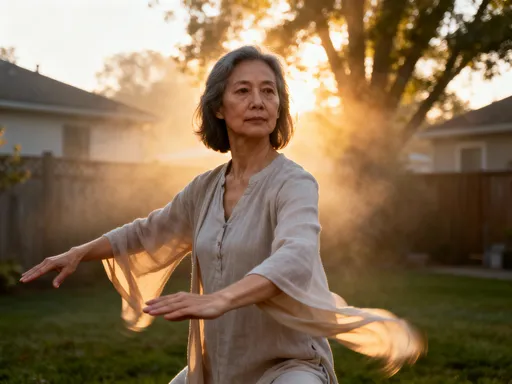
Improving balance is not about brute strength or endurance—it’s about neuromuscular retraining. The nervous system controls every movement, and over time, it adapts to how we use our bodies. If we spend most of our days in chairs with limited range of motion, the brain learns to expect minimal movement variety. This leads to reduced neural signaling to stabilizing muscles, making reactions slower and less precise. The good news is that the nervous system is capable of change throughout life, thanks to a property called neuroplasticity. This means that with the right stimuli, the brain can form new connections and improve coordination, even in adulthood.
Sensorimotor training is the scientific foundation behind balance improvement. It involves exercises that challenge the body’s sensory systems—vestibular, visual, and proprioceptive—while requiring motor responses. For example, standing on an unstable surface like a foam pad forces the feet and ankles to make constant micro-adjustments, enhancing proprioceptive feedback. Closing the eyes during balance tasks removes visual input, increasing reliance on the inner ear and joint sensors. Over time, these challenges prompt the brain to refine its movement strategies, leading to faster, more accurate corrections. Research published in the Journal of Neurophysiology confirms that just six weeks of sensorimotor training can lead to measurable improvements in postural control and reaction time.
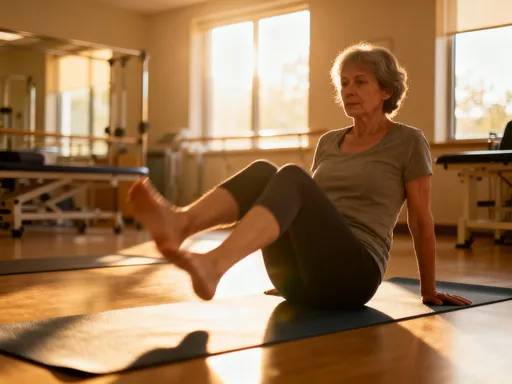
Another key mechanism is muscle recruitment efficiency. When balance is challenged, the body must activate stabilizing muscles in the right sequence and intensity. Poor balance often stems not from weak muscles, but from poor timing in muscle activation. For instance, the gluteus medius, a hip stabilizer, should engage before the foot strikes the ground during walking. If this muscle fires too late, the pelvis drops, increasing strain on the lower back and knees. Targeted balance exercises help retrain these patterns, improving not just stability but overall movement quality. This is why many physical therapists use balance training as part of rehabilitation for joint pain, post-surgery recovery, and even chronic conditions like arthritis. The body learns to move with greater precision, reducing unnecessary stress and improving long-term joint health.
What Actually Works: Three Proven Methods I Tested
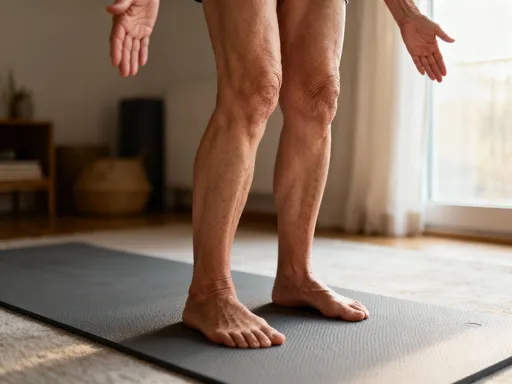
After understanding the science, I began experimenting with specific exercises known to improve balance. The first method I adopted was the single-leg stand. Simple in concept but challenging in practice, this exercise requires standing on one foot for as long as possible, gradually increasing duration. I started with short intervals—10 seconds per leg—and progressed by adding time as stability improved. To increase difficulty, I incorporated variations such as closing my eyes, standing on a folded towel, or moving my arms slowly. Within two weeks, I noticed a difference: I no longer felt the need to hold onto the counter while brushing my teeth. By week four, I could hold a single-leg stance for over 30 seconds with eyes closed—a significant personal milestone.
The second method was the heel-to-toe walk, also known as the tandem gait test. This involves walking in a straight line with the heel of one foot touching the toe of the other, like walking on a tightrope. It challenges both balance and coordination, requiring precise foot placement and core engagement. I practiced this in my hallway daily, focusing on slow, controlled steps. Initially, I wobbled and had to step out of line frequently. But over time, my steps became smoother and more confident. This exercise directly improved my stair navigation and reduced my fear of uneven surfaces. Studies from the Centers for Disease Control and Prevention highlight that heel-to-toe walking is used in clinical fall risk assessments, making it a practical and evidence-based tool for self-monitoring.
The third method involved using a foam balance pad, a soft, unstable surface that amplifies proprioceptive input. I stood on it barefoot for one to two minutes per day, starting with both feet and progressing to single-leg stances. The instability forced my ankles, knees, and hips to make constant adjustments, strengthening deep stabilizing muscles. I also tried gentle weight shifts—moving my center of gravity forward, backward, and side to side—while maintaining balance. Within three weeks, I noticed improved agility during everyday tasks, such as reaching for high shelves or turning quickly to answer the door. These exercises didn’t require a gym or special skills—just a few minutes a day and a willingness to be present in the moment. The results were not dramatic, but they were meaningful: fewer stumbles, more confidence, and a renewed sense of bodily awareness.
Integrating Balance Into Everyday Life
One of the most effective strategies I discovered was weaving balance practice into daily routines—no extra time required. For example, I began standing on one leg while brushing my teeth, using the sink for light support if needed. This turned a mundane activity into a functional exercise. Similarly, I started doing mini balance checks while waiting for the kettle to boil or during phone calls. These brief moments added up, reinforcing neural pathways without disrupting my schedule. Another habit was spending time barefoot indoors. Shoes, especially those with thick soles, reduce sensory feedback from the feet. Going barefoot on carpet, tile, or hardwood allowed my feet to “feel” the ground better, enhancing proprioception. I also introduced variety in walking surfaces—pacing on grass, gravel, or textured mats—to challenge my feet in different ways.
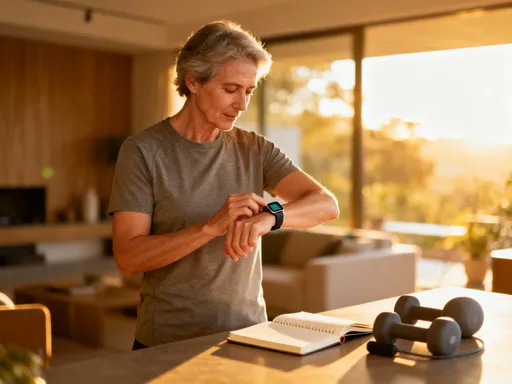
Environmental adjustments played a role too. I cleared clutter from hallways to create safe spaces for movement and added non-slip mats in the bathroom. Good lighting, especially at night, helped maintain visual input for balance. I also became more mindful of posture—sitting with both feet flat on the floor, standing with weight evenly distributed, and avoiding prolonged static positions. These small changes supported better alignment and reduced strain on stabilizing muscles. Behavioral cues were essential for consistency. I placed sticky notes on the bathroom mirror as reminders and tracked my progress in a journal. Celebrating small wins—like holding a pose longer or completing a week without support—kept me motivated. Over time, these habits became automatic, no longer requiring effort or thought.
The key insight was that consistency matters more than intensity. You don’t need to train for hours or achieve perfect form. Just a few minutes of focused attention each day can lead to measurable improvements. The brain responds to repetition, and even brief exposures to balance challenges strengthen neural connections. This approach made the process sustainable and enjoyable, rather than another chore on the to-do list. It wasn’t about becoming an athlete—it was about moving through life with greater ease and confidence.
When to Seek Professional Guidance
While balance training is safe and beneficial for most people, it’s important to recognize when professional guidance is needed. If you experience frequent dizziness, unexplained loss of coordination, blurred vision during movement, or a history of falls, it’s essential to consult a healthcare provider before starting any new routine. These symptoms could indicate underlying conditions such as inner ear disorders, neurological issues, or cardiovascular problems that require medical evaluation. A primary care physician, physical therapist, or vestibular specialist can perform assessments to determine the cause of imbalance and recommend appropriate interventions.
For individuals with chronic conditions like diabetes, Parkinson’s disease, or joint replacements, balance training should be tailored to individual capabilities. A physical therapist can design a personalized program that addresses specific needs and ensures safety. They may use tools like balance scales, motion sensors, or gait analysis to track progress objectively. Professional guidance is also valuable for learning proper technique, especially when using unstable surfaces or performing dynamic movements. Even small errors in form can reduce effectiveness or increase injury risk, so expert input can make a significant difference.
It’s also important to remember that progress varies from person to person. Some may notice improvements within days, while others may take weeks or months. Science supports the idea that effort leads to change, but it does not demand perfection. The goal is not to achieve flawless balance but to enhance stability, reduce risk, and improve quality of life. Listening to your body, respecting limitations, and seeking help when needed are all signs of responsible self-care. Balance training is a personal journey—one that benefits from patience, awareness, and professional support when necessary.
Balance is more than staying upright—it’s a window into how well your body and brain work together. By applying small, science-based adjustments consistently, meaningful improvements are possible at any age. It’s not about dramatic changes, but mindful daily choices that support long-term stability and confidence. This journey taught me that sometimes, the most powerful health shifts come from paying attention to what we’ve long taken for granted.