We can’t agree on the alarm again: How one smart security system stopped our family’s nightly debates
Family arguments over who should check the locks or arm the security system used to be our nightly routine. One wanted tighter safety, another forgot every evening, and someone always worried the dog was trapped inside. It felt like no setting pleased everyone. Then we installed a shared smart security system—and suddenly, peace replaced panic. No more blame, no more confusion. Just quiet confidence. This is how technology didn’t just protect our home, but finally brought us into sync. What started as a simple upgrade turned into something deeper: a shift in how we communicate, trust, and care for one another. And honestly? I didn’t see that coming.
The Nightly Standoff: When Security Stressed Our Family More Than It Protected Us
Every night, like clockwork, it happened. The kids were brushing their teeth, the dog was circling her bed, and someone—usually me—would call out, “Did anyone arm the alarm?” Silence. Then a chorus of “I thought you did!” or “Wait, is it even on?” That moment, small as it seemed, carried a weight that grew heavier over time. It wasn’t just about the alarm. It was about who felt responsible, who felt trusted, and who felt nagged. My husband, always the cautious one, would go around checking every door, even after the system was armed. “Just to be sure,” he’d say. But that “just to be sure” started to feel like a quiet accusation: You didn’t do it right.
Meanwhile, our teenage daughter rolled her eyes every time the alarm beeped. “Why does it have to be so loud? It’s like living in a prison.” And honestly, I got it. The constant reminders, the beeping keypad, the tension in the air—it didn’t feel like safety. It felt like stress. We were all trying to do the right thing, but we were doing it in isolation, with mismatched expectations. One of us wanted military-level security. Another just wanted to walk in the door without punching in a code. And me? I just wanted to stop having the same argument every single night. The irony wasn’t lost on me: we were so focused on keeping danger out that we were letting it in—through our own friction.
What made it worse was how personal it felt. When I forgot to arm the system, I felt like a failure. When my husband double-checked the locks, I felt like he didn’t trust me. And when our daughter ignored the alerts, it felt like she didn’t care. But none of that was true. We all cared deeply. We just didn’t have a way to share that care. The lack of a unified system meant we were all operating in the dark, guessing at each other’s actions, filling in the blanks with worry. And in that space between what we assumed and what was actually happening, resentment quietly grew. We weren’t unsafe because of the world outside. We were uneasy because, inside our own home, we didn’t feel like a team.
Too Many Choices, Too Much Confusion: Why Picking a System Felt Impossible
When we finally agreed it was time for a change, we walked into a whole new kind of chaos: the world of smart home security. I remember standing in the electronics aisle, staring at rows of boxes with names like “SafeHome Pro X9” and “GuardianLink 360.” Each one promised peace of mind, but the fine print was anything but peaceful. Do I need indoor cameras? Outdoor sensors? Cellular backup? What’s the difference between wired and wireless? And why does “cloud storage” sound like something that should be free, but costs $15 a month? I felt like I needed a degree just to choose a door sensor.
My husband wanted professional monitoring—someone to call if the alarm went off. Our daughter wanted voice control so she could arm it with Alexa. I just wanted something simple that wouldn’t confuse my mom when she came to pet-sit. And then there was the budget. One system promised AI-powered facial recognition. Another boasted “military-grade encryption.” But were we really going to be targeted by hackers? Or did we just need to know the back door was locked? The more we read, the more overwhelmed we felt. Every feature sounded important, but none of them answered the real question: Will this work for all of us?
We spent weeks researching. We watched YouTube reviews. We read forums where people argued about “Z-wave vs. Zigbee” like it was a sports rivalry. I asked a friend whose house was fully automated, and she said, “Just pick one and live with it.” But that wasn’t reassuring. What if we picked wrong? What if we spent hundreds of dollars on something too complicated, and no one used it? What if it created even more arguments? The fear of making a bad decision was paralyzing. We weren’t just buying a gadget—we were choosing how our family would interact with safety, every single day. And no product description could tell us if it would actually bring us closer together or just add another layer of frustration.
The Game Changer: How a Shared Smart Security System Brought Clarity and Calm
What finally broke the logjam was realizing we didn’t need the most advanced system. We needed the most inclusive one. We chose a smart security setup that came with a single app, accessible to everyone in the family over 13. No more guessing. No more memory lapses. Just real-time updates that kept us all in the loop. The first night we used it, I got a notification: “Front door locked at 8:47 PM.” I didn’t have to ask. I didn’t have to check. I just knew. And that small moment of certainty? It was revolutionary.
The system allowed us to create custom modes—“Away,” “Home,” “Night,” and even “Dog Night,” which kept the indoor camera active but silenced alerts unless motion was detected in restricted areas. When we left for vacation, we tapped “Away,” and the lights turned off, the thermostat adjusted, and the cameras started recording. When my husband came home late, the system recognized his phone and disarmed automatically. No fumbling for keys. No beeping. Just a quiet welcome.
But the real shift wasn’t in the tech—it was in us. Our daughter, who used to ignore security entirely, started getting alerts and responding to them. “Mom, the garage door opened at 3 AM,” she texted once. It wasn’t fear. It was pride. She felt involved. She felt useful. And for the first time, we weren’t assigning blame—we were sharing responsibility. The system didn’t make us more careful. It made us more connected. It didn’t replace our instincts; it amplified them. And because we could all see the same information, we stopped questioning each other’s actions. Trust didn’t have to be earned in big moments. It was built in small, silent confirmations: The door is locked. The system is armed. We’re safe.
From Chaos to Coordination: Building Trust Through Real-Time Updates
One of the most unexpected benefits was how much anxiety it eased—especially for the person in our family who worries the most. My husband used to wake up in the middle of the night, convinced he’d forgotten to lock the patio door. Now, he just opens the app. “Looks like the sliding door is secure,” I’ll say, showing him the status. No trip downstairs. No disrupted sleep. Just instant reassurance. That tiny act—seeing the same truth—has done more for our peace of mind than any alarm ever could.
And it’s not just about the locks. The app sends activity logs, so we can see who armed the system and when. When our daughter started driving, she got a reminder to arm the alarm when she left the house. No nagging. No “Don’t forget!” text from me. Just a gentle alert from the system. And because it wasn’t coming from me, she didn’t resist it. In fact, she started doing it without being reminded. That small shift—technology delivering the message instead of me—removed so much tension. We weren’t policing each other anymore. We were supporting each other.
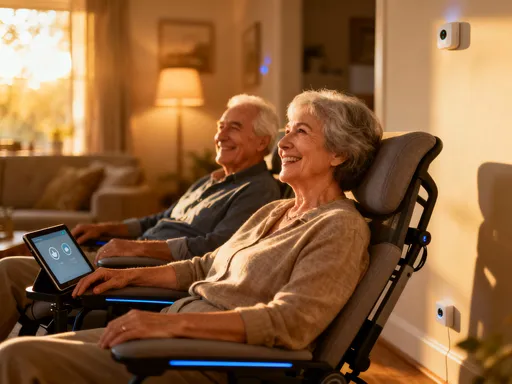
Even my elderly parents got used to it. When they come to stay, I set up a temporary access code that expires after their visit. They don’t have to download the app or learn new tech. But I can see when they come and go, and I know the system is still protected. It’s not about control. It’s about care. The transparency didn’t create surveillance—it created security. And in a world where we’re often guessing what’s happening at home when we’re away, that clarity is priceless. We’re not watching each other. We’re watching out for each other.
Custom Rules for Real Lives: Making Security Work Around *Your* Family, Not the Other Way
The magic of this system isn’t in its bells and whistles. It’s in how flexible it is. We didn’t have to change our lives to fit the technology. We taught the technology to fit our lives. For example, we set up geofencing so the system disarms automatically when my phone gets within a mile of home—but only after 6 PM. Why? Because I don’t want it unlocking the door when I’m just running to the grocery store at noon. But when I’m coming home from work, tired and carrying bags, it’s a gift. The door unlocks as I approach, the lights turn on gently, and the alarm silences. It feels less like a machine and more like a thoughtful helper.
We also created a “Movie Night” mode. When we’re settling in to watch a film, I tap the button, and the exterior lights turn off, non-urgent alerts are silenced, and the indoor camera in the living room pauses. No more jumping when the app pings during a quiet scene. And when we have guests over, we can generate a one-time code that works for two hours. No need to share the main password. No stress about who has access. After they leave, the code expires automatically. It’s secure, seamless, and stress-free.
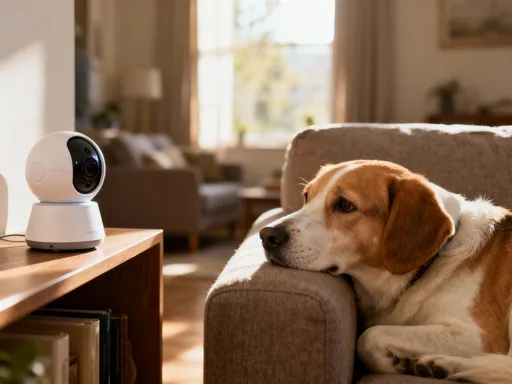
And then there’s the dog. We have a small indoor camera just for her, set to record motion only between midnight and 5 AM. Why? Because that’s when she sometimes barks at shadows. If she does, I get a short clip in the morning. Not a flood of alerts at 2 AM. Just enough to know she’s okay. These little customizations—small to anyone else—make the system feel like it belongs to us. It’s not a one-size-fits-all solution. It’s a living system that adapts to our rhythms, our routines, and even our quirks. And that’s what makes it stick. It doesn’t feel imposed. It feels invited.
Saving Time, Not Just Homes: The Unexpected Gift of Peace of Mind
We bought the system to protect our house. We didn’t realize we’d also protect our time—and our energy. How many hours have we wasted over the years? Driving back to check the garage. Calling each other to confirm the alarm was set. Lying awake, wondering if the back door was locked. That mental load—what psychologists call “invisible labor”—was real. And it was exhausting. But now, that weight is gone. I don’t have to remember everything. I don’t have to remind everyone. The system does it for us.
And what did we gain? Evenings that start with calm instead of chaos. Conversations that aren’t rushed or tense. Kids who go to bed earlier because we’re not stuck in a security loop. Even my patience has improved. When the dog knocks over her water bowl, I don’t snap. I just clean it up. Because the big worries are handled. The small ones don’t feel so big anymore. That cognitive relief—the freedom from constant low-level anxiety—is something no one talks about. But it’s everything. When your mind isn’t cluttered with “Did I…?” and “What if…?”, you have space for “Let’s talk.” “Let’s laugh.” “Let’s just be.”
And honestly, that’s the real upgrade. Not the cameras. Not the sensors. It’s the ability to be present. To enjoy dinner without checking the lock status. To read a book without wondering if the alarm is on. To trust that the people you love are safe, not because you’re watching them, but because you’ve built a system that works for all of you. That’s not just convenience. That’s peace.
More Than a System: How Shared Control Strengthened Our Family Connection
In the end, this wasn’t about technology. It was about us. The smart security system didn’t just guard our doors—it helped us rebuild trust, improve communication, and share responsibility in a way that felt fair. We stopped seeing security as a chore that fell to one person and started seeing it as a shared value. We made decisions together. We customized the system together. And in doing so, we learned to listen to each other’s needs—not just about locks and alarms, but about what makes each of us feel safe and respected.
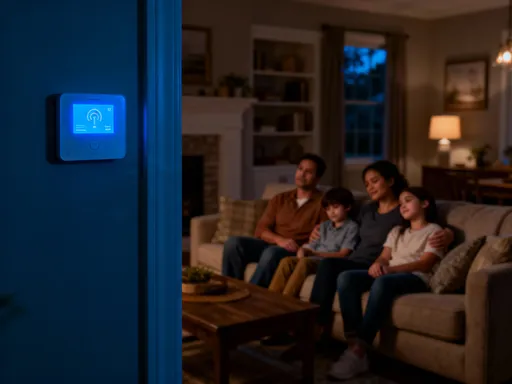
There’s a quiet moment I love now. It’s 9 PM. The house is settling. I glance at my phone and see the notification: “System armed by Daughter.” No reminder. No conflict. Just a simple act of care. And I smile. Because it’s not just that the alarm is on. It’s that she thought of us. She took responsibility. She felt trusted enough to do it—and trusted enough to get it right.
That’s the real power of good technology. It doesn’t replace human connection. It makes space for it. It removes the friction so love can flow more freely. It turns daily routines into quiet acts of care. And it reminds us that safety isn’t just about locked doors and motion sensors. It’s about knowing you’re not alone. That someone’s got your back. That you’re part of a team. In a world that often feels unpredictable, that sense of unity is the greatest protection of all.