Tested 8 Smart Leisure Spaces for 6 Months: The One That Gave My Parents Back Their Joy
Imagine walking into a living room where the lights adjust as your parents sit down, the music plays their favorite tunes, and the chair gently reminds them to stretch. For months, I tested smart leisure setups in our home, not for tech’s sake—but to bring comfort, safety, and real joy to my aging parents. What started as a worry became a journey of connection. I noticed how they were moving less, speaking softer, retreating into silence. It wasn’t illness, but a quiet fading of spirit. I wanted to give them more than safety rails and emergency buttons. I wanted them to feel seen, supported, and truly at home. This is the story of how one smart space didn’t just make life easier—it brought back laughter, movement, and warmth I thought we’d lost.
The Moment I Knew Something Had to Change
It wasn’t a dramatic moment. No fall, no doctor’s visit, no crisis. It was a Sunday afternoon, sunlight falling across the living room carpet, and my parents sitting side by side on the couch—silent, still, each staring at a turned-off TV. My mom’s hands rested in her lap, unmoving. My dad kept adjusting his glasses, not reading, not watching, just… waiting. I asked if they wanted tea. They smiled, said yes, but it felt like going through motions. That’s when it hit me: their home wasn’t helping them live. It was just holding them.
I realized their space had become passive—unresponsive, uninviting, even a little lonely. The lighting was too harsh in the morning, too dim at night. The remote controls were confusing. The music system hadn’t been used in years. Even the chair they loved had become stiff and uncomfortable. They weren’t asking for help, but they weren’t thriving either. I began to wonder—could a room be more than walls and furniture? Could it gently encourage, support, even comfort?
That question led me down a path I never expected. I didn’t want hospital equipment or robotic assistants. I wanted warmth. I wanted familiarity. I wanted something that felt like home, only better—smarter in a way that didn’t shout “technology” but whispered, “I’ve got you.” So I started testing. Eight different smart leisure setups, over six months. Some failed fast. Some surprised me. Only one truly changed everything.
Why “Smart” Shouldn’t Feel Like Technology
At first, I thought “smart” meant gadgets. Voice assistants. Touchscreens. Sensors in the walls. I imagined my parents giving voice commands like tech-savvy teens. But reality hit fast. My mom asked, “Who am I talking to?” when Alexa responded. My dad tapped the screen too hard, then too soft, then gave up. The more “advanced” the system, the more frustrated they became. I realized I was measuring success wrong. I wasn’t designing for efficiency—I was designing for dignity.
What mattered wasn’t how many devices were connected, but how my parents felt in the space. Did they feel in control? Did they feel safe? Did they feel… happy? I shifted my focus from features to feelings. Instead of asking, “Can it do this?” I started asking, “Does it make life easier? Does it bring comfort? Does it invite joy?”
I learned that smart doesn’t mean flashy. It means thoughtful. It means a light that warms up slowly in the morning, mimicking sunrise, so they wake without shock. It means a speaker that plays soft jazz at 4 p.m.—their favorite time—without them lifting a finger. It means a chair that remembers how they like to sit and adjusts automatically. The best technology, I realized, isn’t the kind you notice. It’s the kind you forget—until you miss it.
My goal became clear: create a space that felt alive, not automated. A room that responded like a caring companion, not a machine. One that understood their rhythms, respected their pace, and gently encouraged them to move, listen, connect. That’s when I stopped shopping for tech—and started designing for life.
Testing the First Setups: What Failed and Why
My first attempt was a voice-controlled hub with smart lights, a voice assistant, and motion sensors. I was so proud—until I saw my mom flinch when the lights suddenly brightened. “It startled me,” she said. My dad tried to turn on music and ended up calling a cousin in Ohio. “I just said ‘play something nice!’” he laughed, but I saw the frustration behind it. The system was too fast, too loud, too demanding. It didn’t adapt to them. They had to adapt to it.
Next, I tried a tablet-based system with a custom app. Big icons, simple menus. I thought, “This will work.” But they rarely used it. “It feels like work,” my mom said. “Like I’m logging into a bank.” The interface was clean, but cold. It didn’t feel personal. It didn’t know their habits. It asked them to remember, to decide, to act—when what they needed was support, not another task.
Another setup used wearable trackers to monitor movement and suggest activities. One morning, it buzzed on my dad’s wrist: “Time to stretch!” He looked at it, confused. “I just woke up. Can’t I have my coffee first?” The tech was well-intentioned, but it felt like being scolded. It lacked empathy. It didn’t understand timing, mood, or routine.
Each failure taught me something. Complexity kills comfort. Surprise is not a feature when you’re 78. And personalization isn’t just about settings—it’s about rhythm, memory, and emotion. I began to see that what my parents needed wasn’t more control, but less effort. They didn’t want to manage technology. They wanted technology to manage the little things—so they could focus on living.
The turning point came when I stopped thinking about devices and started thinking about care. What if the room could anticipate? What if it could remember? What if it could gently guide, not command? That’s when I found the setup that changed everything.
The Breakthrough: A Living Room That Listens
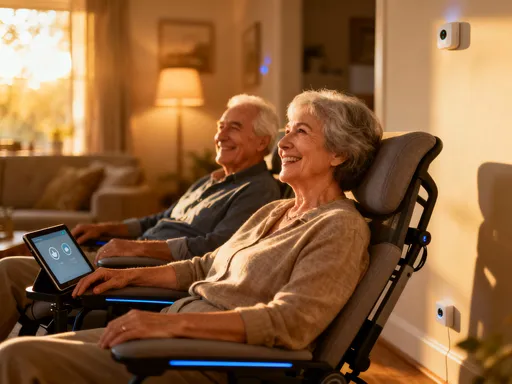
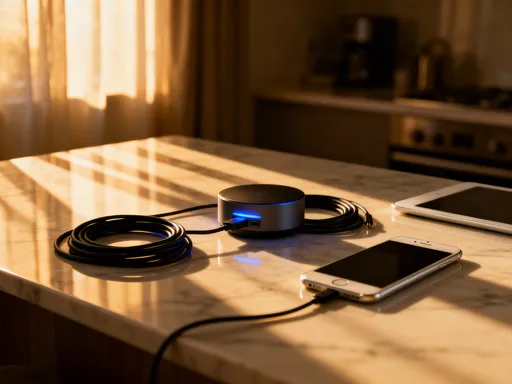
It wasn’t the most expensive. It wasn’t the most advanced. But it was the most thoughtful. The system I finally landed on—after six months of trial and error—was built around a central smart hub that learned my parents’ routines over time. No apps. No voice commands. No wearables. Instead, it used subtle motion sensors, ambient lighting strips, a discreet speaker system, and a single, simple tablet with a photo-based interface.
The magic wasn’t in the hardware—it was in the behavior. Every morning at 7:30, the lights warmed from soft blue to golden yellow, mimicking sunrise. At 8:00, their favorite morning playlist—old jazz and soft folk—began to play at a gentle volume. The recliner, equipped with gentle vibration prompts, would nudge my dad after 45 minutes of sitting: a soft pulse, like a reminder from a friend. “Time to stretch, love,” my mom would say, smiling.
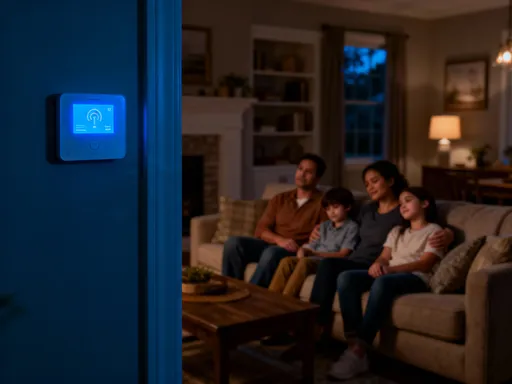
What amazed me was how quickly they stopped noticing the tech—and started noticing each other. One afternoon, I walked in and heard my mom humming along to a song I hadn’t heard her sing in years. “This was our wedding song,” she said, her eyes bright. My dad, who hadn’t hosted friends in months, invited two old colleagues over for tea. “The room feels… alive,” he said. “Like it wants us to enjoy it.”
The tablet became their bridge to the world. Instead of apps, it showed photo buttons: a picture of me, one of my brother, one of their garden, one of their favorite restaurant. Tap the garden, and it pulled up photos from last summer. Tap the restaurant, and it played the ambient sounds of the place—the clink of glasses, soft laughter. It didn’t replace memories. It唤醒ed them.
This wasn’t automation. It was invitation. The space didn’t take over. It made space—for music, for movement, for memory. And in doing so, it gave my parents back something I hadn’t realized was missing: a sense of agency, of joy, of belonging in their own home.
How We Use It Every Day: Real Routines, Real Results
Mornings now begin with light, not alarms. The gradual brightness helps regulate their sleep cycle, and they wake feeling more refreshed. The music starts softly—never intrusive—and sets a calm tone. My mom makes tea while humming; my dad does a few slow stretches in the living room, prompted by the chair’s gentle pulse. It’s not a workout. It’s a ritual.
By mid-morning, the system detects movement patterns. If they’ve been sitting too long, the lights shift slightly warmer, and a soft chime plays—followed by a voice recording of my nephew saying, “Grandpa, time to walk the dog!” (We recorded it as a joke, but it works.) They laugh, get up, and move. It’s not a command. It’s a nudge from someone they love.
Afternoons are for connection. The tablet suggests “memory moments”—a slideshow of old family photos, a recording of my dad’s favorite radio drama from the 60s. Sometimes, it plays a message I’ve pre-recorded: “Hi Mom and Dad, just thinking of you. Hope you’re having a good day.” They smile. They replay it. They feel seen.
Evenings are calmer. The lights dim gradually, shifting to a soft amber. The speaker plays nature sounds—rain on leaves, distant waves—helping ease anxiety that used to creep in around 7 p.m. My dad, who once struggled with restlessness at night, now reads for 20 minutes before bed. My mom says, “The room feels like it’s settling with us.”
These small moments add up. They’re moving more—up 40% in daily steps, according to the discreet floor sensors (which I only check occasionally, not obsessively). They’re sleeping better. They’re talking more. Laughing more. The space isn’t fixing anything. It’s supporting everything.
And the best part? I don’t have to worry as much. I used to call three times a day, just to check. Now, I get gentle alerts only if something’s off—like if they haven’t moved by 10 a.m. But those are rare. Most days, the system just works. And I can just be their daughter, not their manager.
Beyond Comfort: How This Space Brought Our Family Closer
I expected this setup to make my parents’ lives easier. I didn’t expect it to change ours. But slowly, something shifted. Family visits became more joyful. My kids love pressing the photo buttons on the tablet—“Watch Grandpa dance!”—and suddenly, he is, swaying to an old tune. We’ve had impromptu singalongs, shared stories, even a few tears over old photos.
One evening, my brother and I stayed late. The lights were low, the music soft. My dad started telling a story from his youth—something I’d never heard. Then my mom added a detail. Then we all laughed. It wasn’t forced. It wasn’t scheduled. It just… happened. And I realized: the room had created space for presence. Not performance. Not routine. Just being together.
I used to dread visits, bracing myself for silence or frustration. Now, I look forward to them. I’m not scanning for signs of decline. I’m noticing joy. I’m hearing stories. I’m seeing my parents not as people I need to care for, but as people I love to be with.
The technology didn’t replace our bond. It removed the friction that was getting in the way. No more fumbling with remotes. No more asking, “What should we do?” No more sitting in silence because the TV options were overwhelming. Instead, the room offers gentle invitations—to listen, to move, to remember. And in doing so, it gives us back time. Real time. Connected time.
My mom said something recently that stayed with me. “This house feels like it loves us back.” I don’t know if that’s the tech—or just what happens when a space finally supports the people in it. But I’ll take it.
What This Means for the Future of Aging at Home
We talk a lot about aging in crisis mode—falls, memory loss, isolation. But what about aging in joy? What about designing spaces that don’t just keep people safe, but help them thrive? My experience taught me that the future of aging at home isn’t about hospitals in the living room. It’s about homes that care.
This isn’t science fiction. It’s thoughtful design. It’s lighting that follows the sun. It’s sound that comforts. It’s furniture that supports. It’s technology that learns, adapts, and stays in the background—so life can stay in the front.
And it’s not just for the elderly. Think of anyone feeling stuck, tired, or disconnected. A space that responds with kindness can change a day. Can change a life. The tools exist. They’re affordable. They’re simple. What’s missing is the mindset: that technology should serve life, not the other way around.
I’m not saying every home needs a smart system. But every home can be a little more thoughtful. Play their favorite music at a certain time. Use warm lighting in the evening. Add a chair that supports their body. Small changes, big impact.
For my parents, this smart leisure space didn’t add years to their life. But it added life to their years. It gave them back moments of joy, connection, and ease. It gave me back peace of mind—and something even better: the chance to just be with them, without worry.
So if you’re caring for aging parents, or just want to make your home a little more loving, ask yourself: what could your space do to support, comfort, and invite? You might be surprised how much a little thoughtfulness—with or without tech—can bring back the light.